
GloBE Pillar Two Model Excel Template
Take the complexity out of Pillar Two modelling with a comprehensive GloBE Pillar Two Model in Excel. Designed for finance, tax and accounting professionals, this ready-to-use financial model provides a structured framework for calculating GloBE Income, Covered Taxes, Effective Tax Rates (ETRs), Substance-Based Income Exclusion (SBIE), Top-up Tax and the QDMTT, IIR and UTPR collection mechanisms.
GloBE Pillar Two Financial Model in Excel
Built across 26 integrated Excel tabs, with a 30-jurisdiction architecture, the model connects entity-level financial data with jurisdiction-level Pillar Two calculations, elections, safe harbours, tax allocations, reporting and automated data checks. It provides a practical starting point for analysing OECD Pillar Two / GloBE rules, modelling potential Top-up Tax exposure and preparing supporting calculations for the GloBE Information Return and local filing requirements.
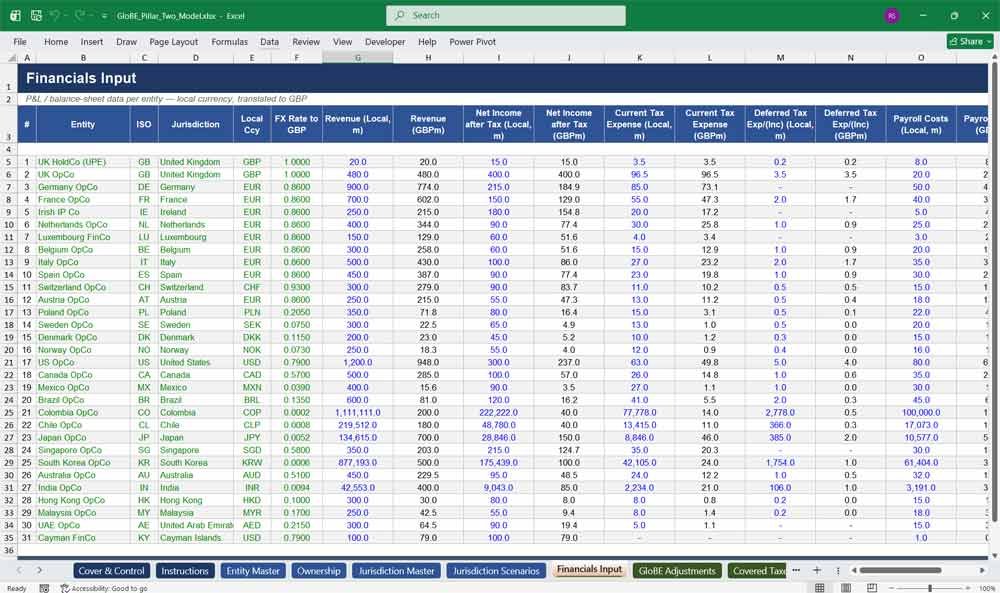
This Pillar Two Excel model brings the key components of the GloBE framework together in one structured financial modelling tool. Enter entity-level financial information in local currency and the model automatically translates relevant figures to GBP, aggregates data by jurisdiction and feeds the calculation engine through to the final Top-up Tax allocation.
The model covers the core stages of a Pillar Two calculation, including GloBE adjustments, Covered Taxes, deferred tax adjustments, SBIE, GloBE ETR, Top-up Tax, QDMTT, IIR and UTPR. It also includes elections, Transitional CbCR Safe Harbour tests, De Minimis testing, tax credit treatment, jurisdiction scenarios and entity-level Top-up Tax allocation.
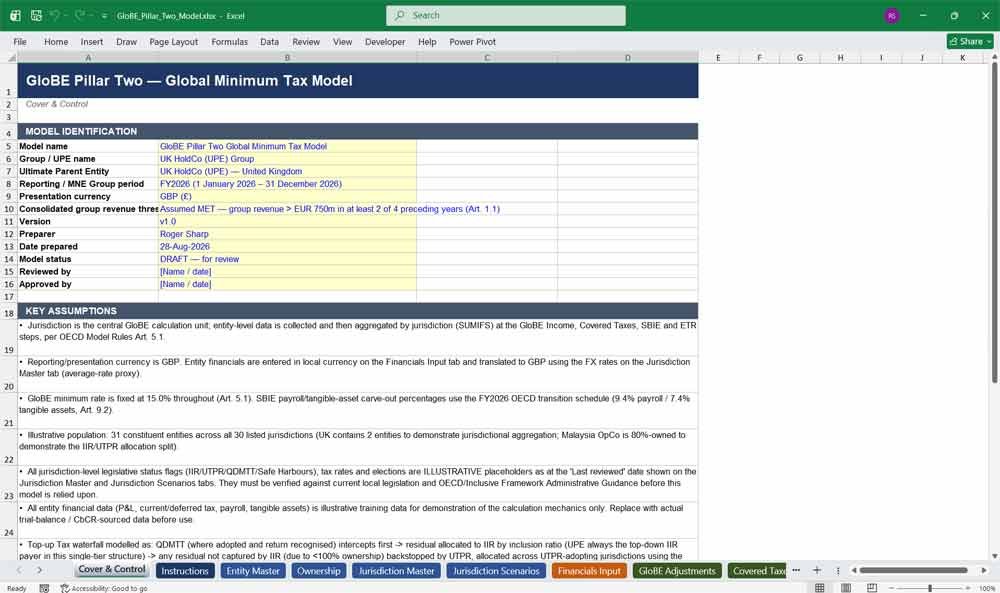
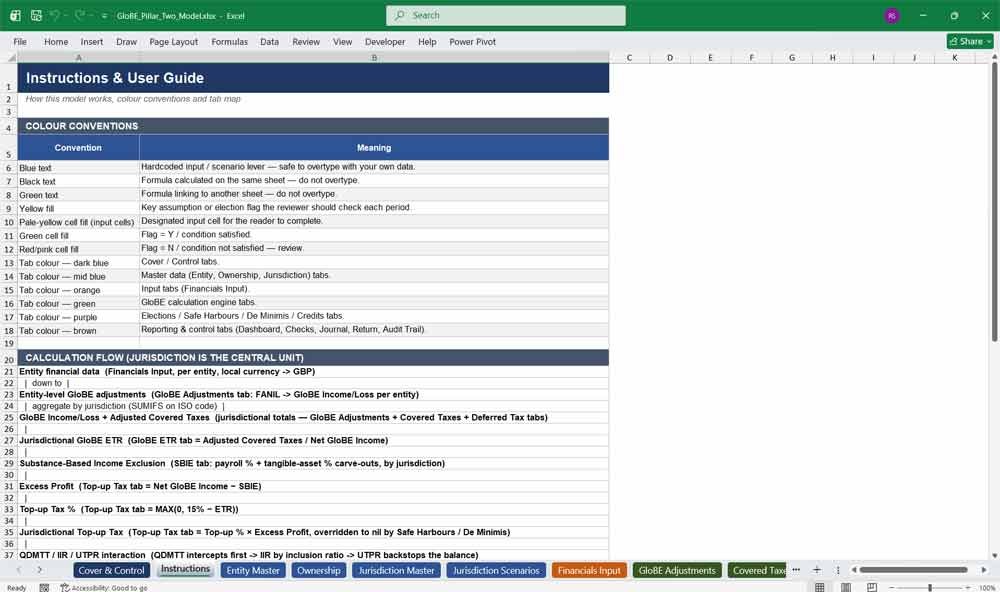
Key features of the GloBE Pillar Two Excel Model
- 26 integrated Excel tabs covering the complete Pillar Two modelling workflow.
- Entity Master supporting a multi-entity, multi-jurisdiction group structure.
- Jurisdiction Master containing tax rates, currencies, FX rates, GloBE rule adoption, safe-harbour indicators, SBIE rates and filing information.
- Financials Input for revenue, net income, current and deferred tax, payroll and tangible assets.
- GloBE Income calculations incorporating the Net Tax Expense addback and configurable GloBE adjustments.
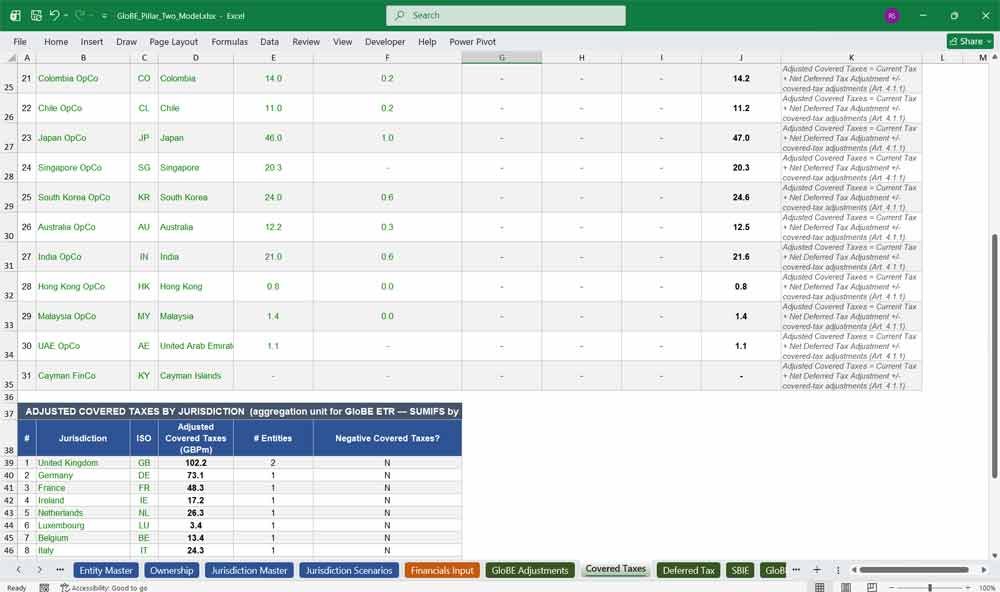
- Adjusted Covered Taxes and deferred tax recast calculations.
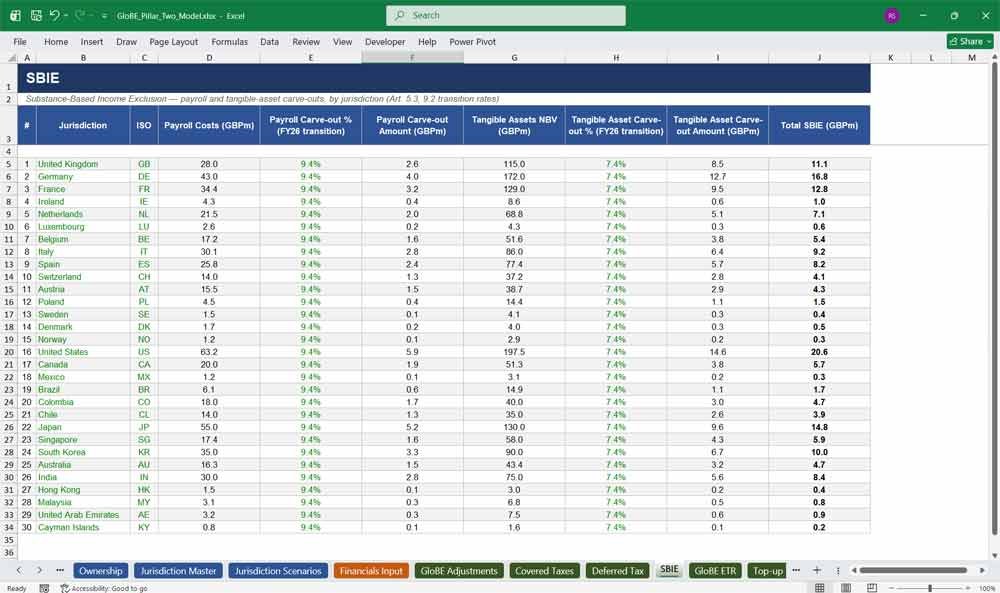
- Substance-Based Income Exclusion (SBIE) calculations using payroll and tangible assets.
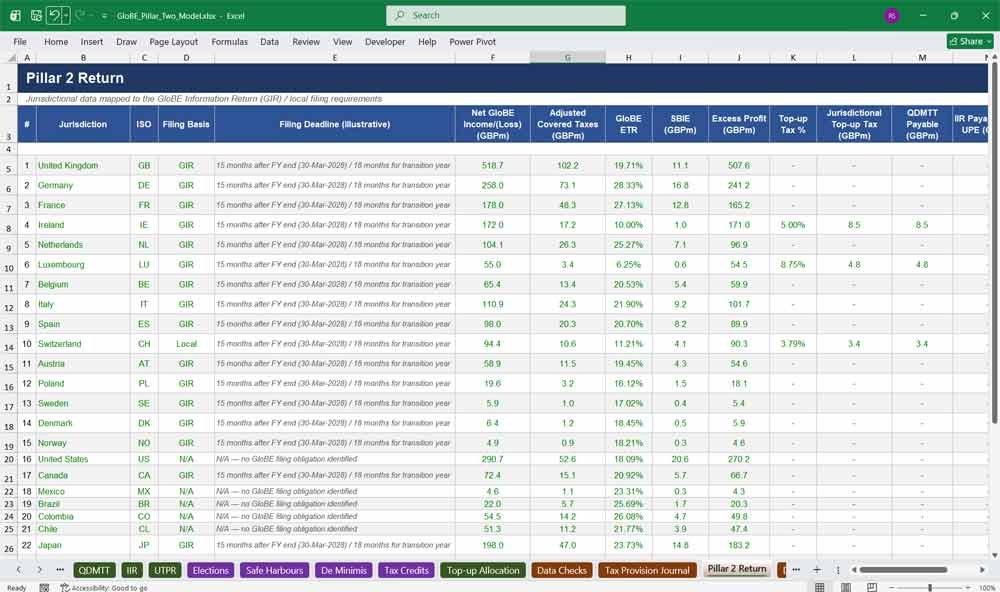
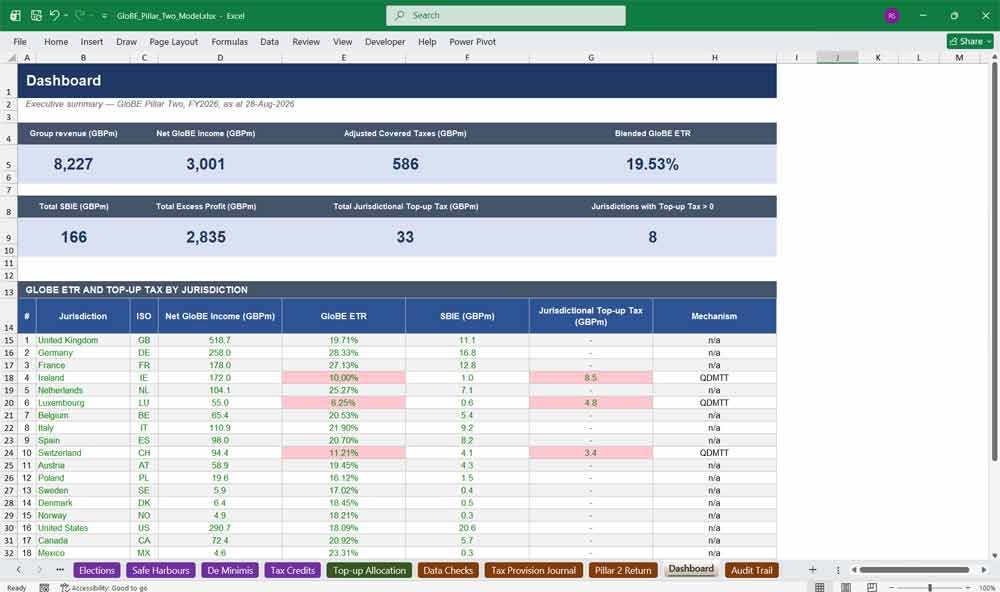
- Jurisdictional GloBE ETR calculations with automated identification of jurisdictions below the 15% minimum rate.
- Top-up Tax calculations incorporating Safe Harbour and De Minimis overrides.
- QDMTT, IIR and UTPR waterfall calculations to model how Top-up Tax is collected.
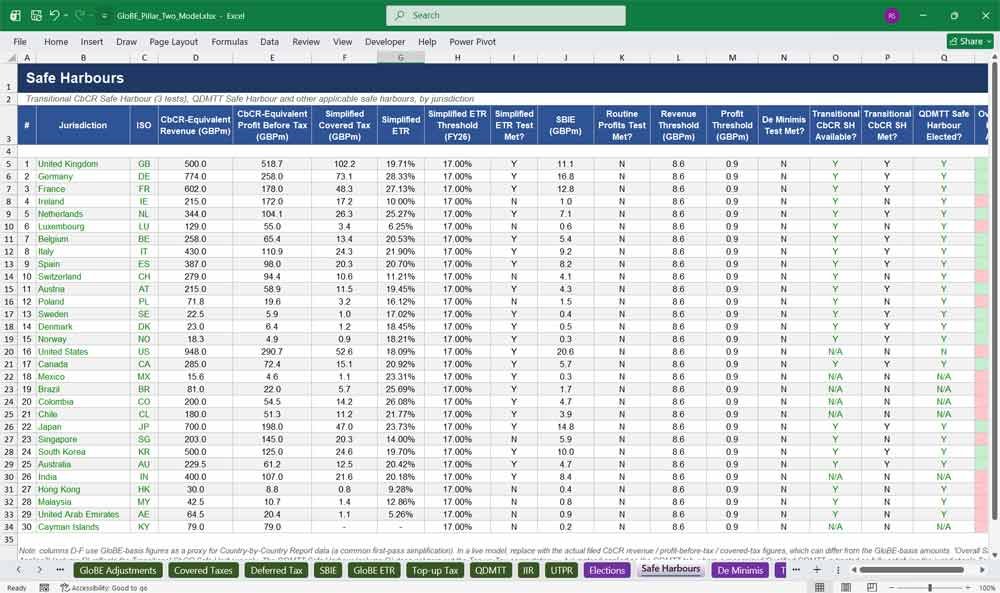
- Transitional CbCR Safe Harbour testing, including Simplified ETR, Routine Profits and De Minimis tests.
- Pillar Two elections and tax credit modelling.
- Top-up Tax allocation back to constituent entities.
- Automated Data Checks with 17 integrity and reconciliation tests.
- Tax Provision Journal supporting QDMTT, IIR and UTPR accounting entries.
- Pillar Two Return tab compiling key jurisdictional data for reporting.
- Executive Dashboard providing a one-page summary of key Pillar Two metrics.
- Audit Trail and Jurisdiction Scenarios supporting review, documentation and scenario analysis.
Model Pillar Two Top-up Tax and GloBE ETR Exposure
The workbook is designed to help users identify jurisdictions where the GloBE Effective Tax Rate falls below the 15% minimum rate, calculate Excess Profit after the Substance-Based Income Exclusion and determine potential Top-up Tax. Conditional formatting and automated flags make low-ETR jurisdictions and Top-up Tax exposure easy to identify.
The model then follows the QDMTT → IIR → UTPR collection waterfall, showing how jurisdictional Top-up Tax can be intercepted domestically through a QDMTT and how residual amounts can flow through the Income Inclusion Rule and Undertaxed Profits Rule.
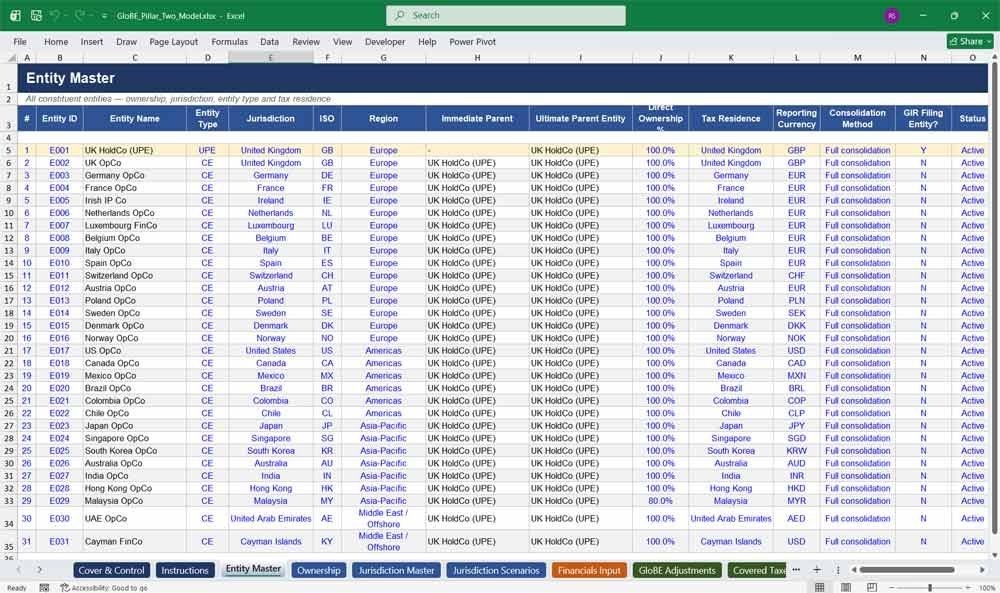
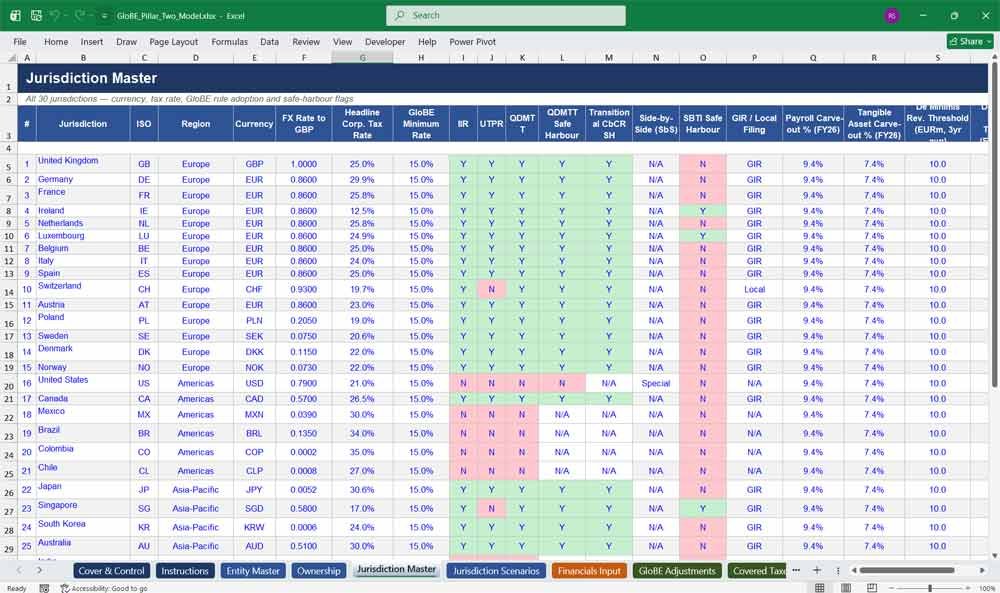
A Practical OECD Pillar Two Modelling Tool
Whether you are assessing Pillar Two tax exposure, building an internal tax provision model, reviewing jurisdictional ETRs or preparing supporting GloBE reporting calculations, this Excel template provides a transparent and auditable modelling structure.
Inputs, assumptions, calculations and outputs are separated across dedicated tabs, while cross-sheet links connect the calculation engine. Automated reconciliation checks help users validate the integrity of the model and trace jurisdictional results back to the underlying entity-level data.
Who is the GloBE Pillar Two Excel Template for?
The model is suitable as a starting point for:
- Corporate tax and international tax teams
- Group finance and accounting departments
- Tax provision and reporting teams
- Financial modelling professionals
- Tax advisers and consultants
- Multinational groups assessing Pillar Two exposure
- Professionals analysing QDMTT, IIR and UTPR implications
Download the GloBE Pillar Two Model Excel Template to access an integrated financial modelling framework covering the key calculations, assumptions, elections, safe harbours, reporting outputs and allocation mechanics required for a comprehensive Pillar Two analysis.
Why Should You Choose This Model?
Choose this GloBE Pillar Two Excel Model for a structured, transparent and practical approach to Pillar Two financial modelling. The workbook brings the key GloBE calculations together in one integrated model, from entity-level financial inputs and GloBE adjustments through to ETR, SBIE, Top-up Tax, QDMTT, IIR and UTPR calculations. With dedicated tabs for elections, safe harbours, reporting, tax provision, jurisdiction scenarios and an executive dashboard, it provides a clear view of potential Pillar Two exposure while reducing the need to build complex calculations from scratch.